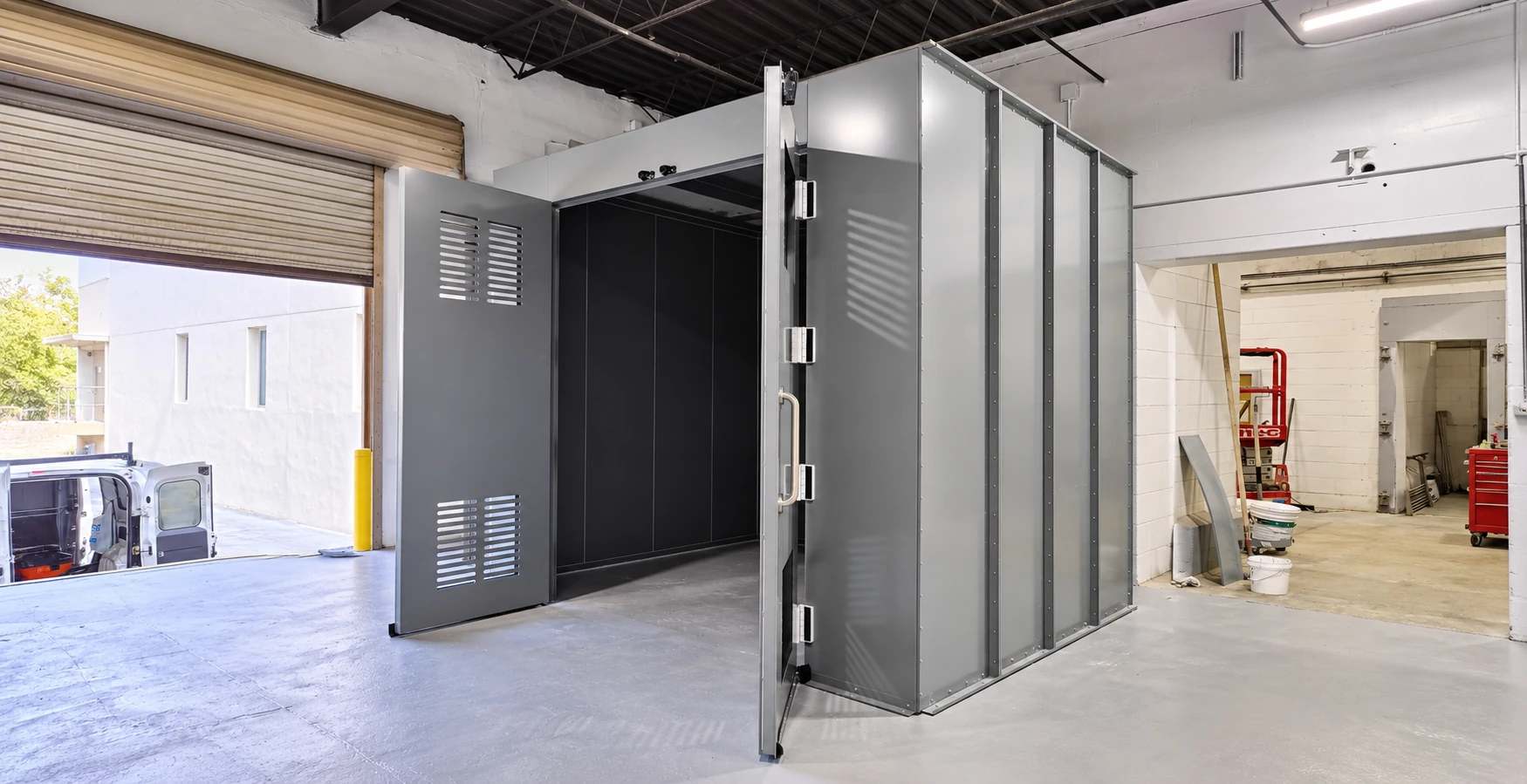
ETL-listed spray booths and prep stations engineered for I-CAR Gold Class shops, MSO networks, and independent collision centers. 100 FPM downdraft airflow. Integrated spray-and-bake capability. NFPA 33 compliant. Delivered and installed nationwide.


Full downdraft airflow, an integrated bake cycle and ETL listing, built to your shop dimensions.
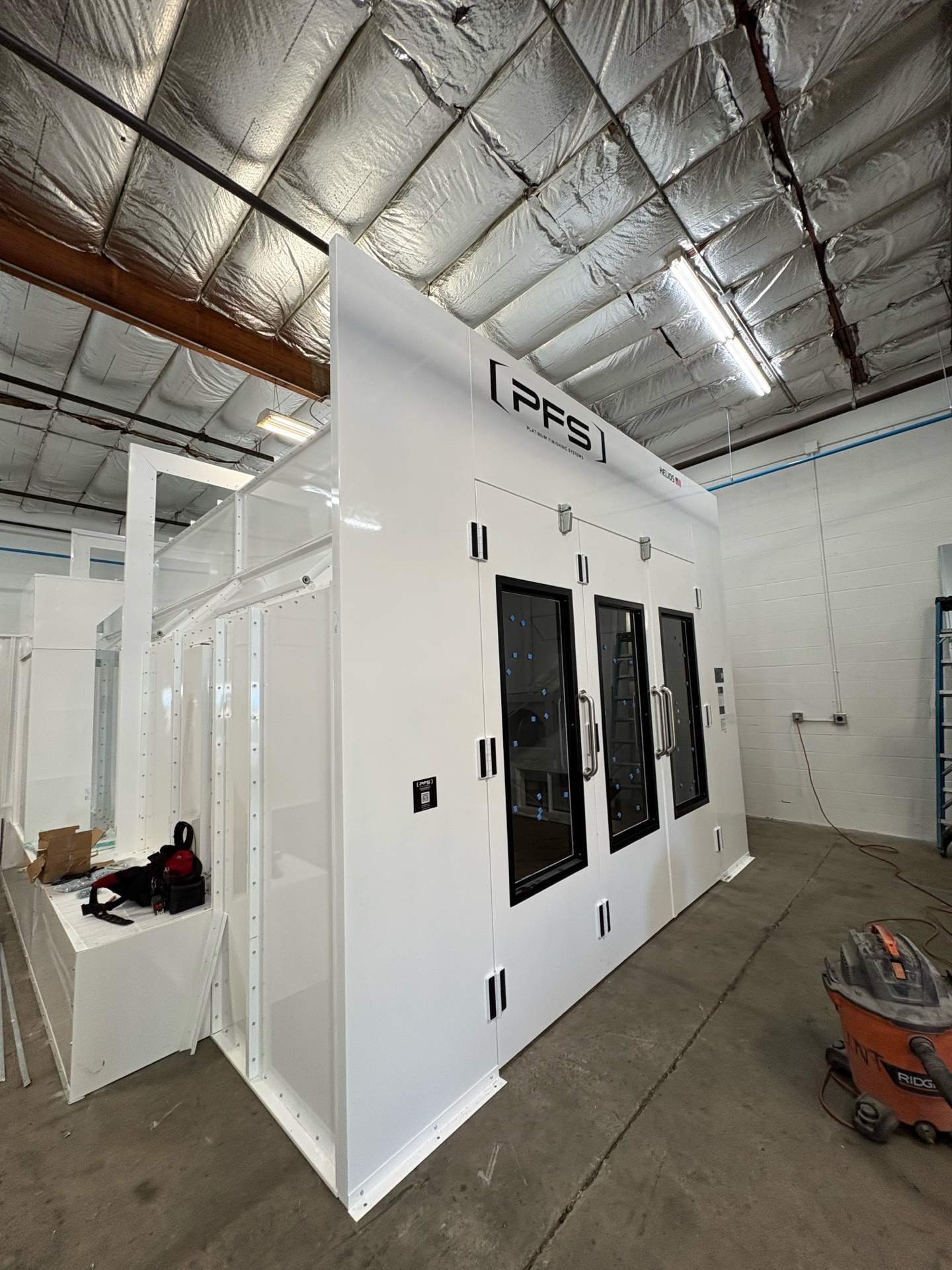
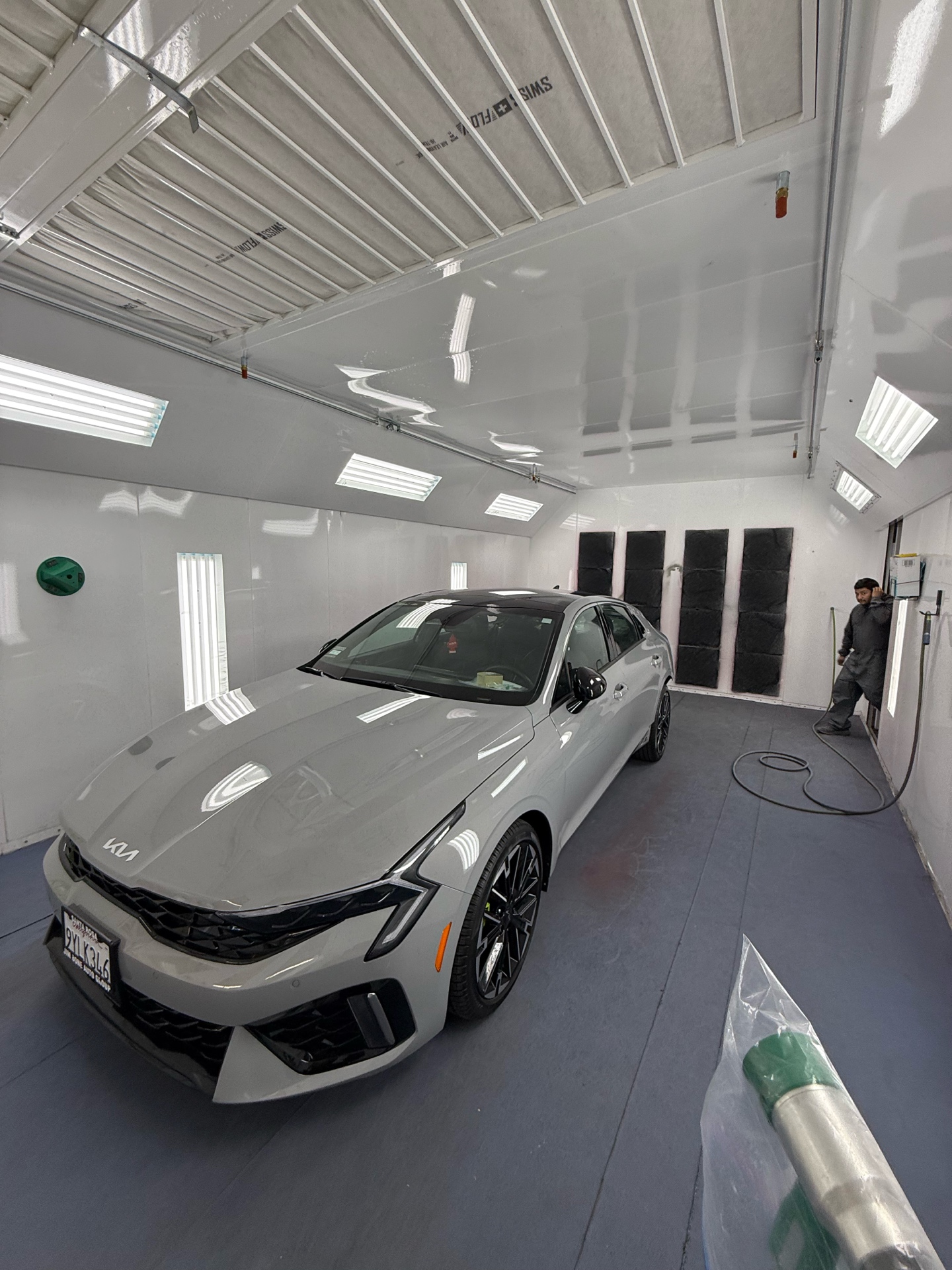
Full ceiling-to-floor airflow. Maximum cleanliness for OEM color match.
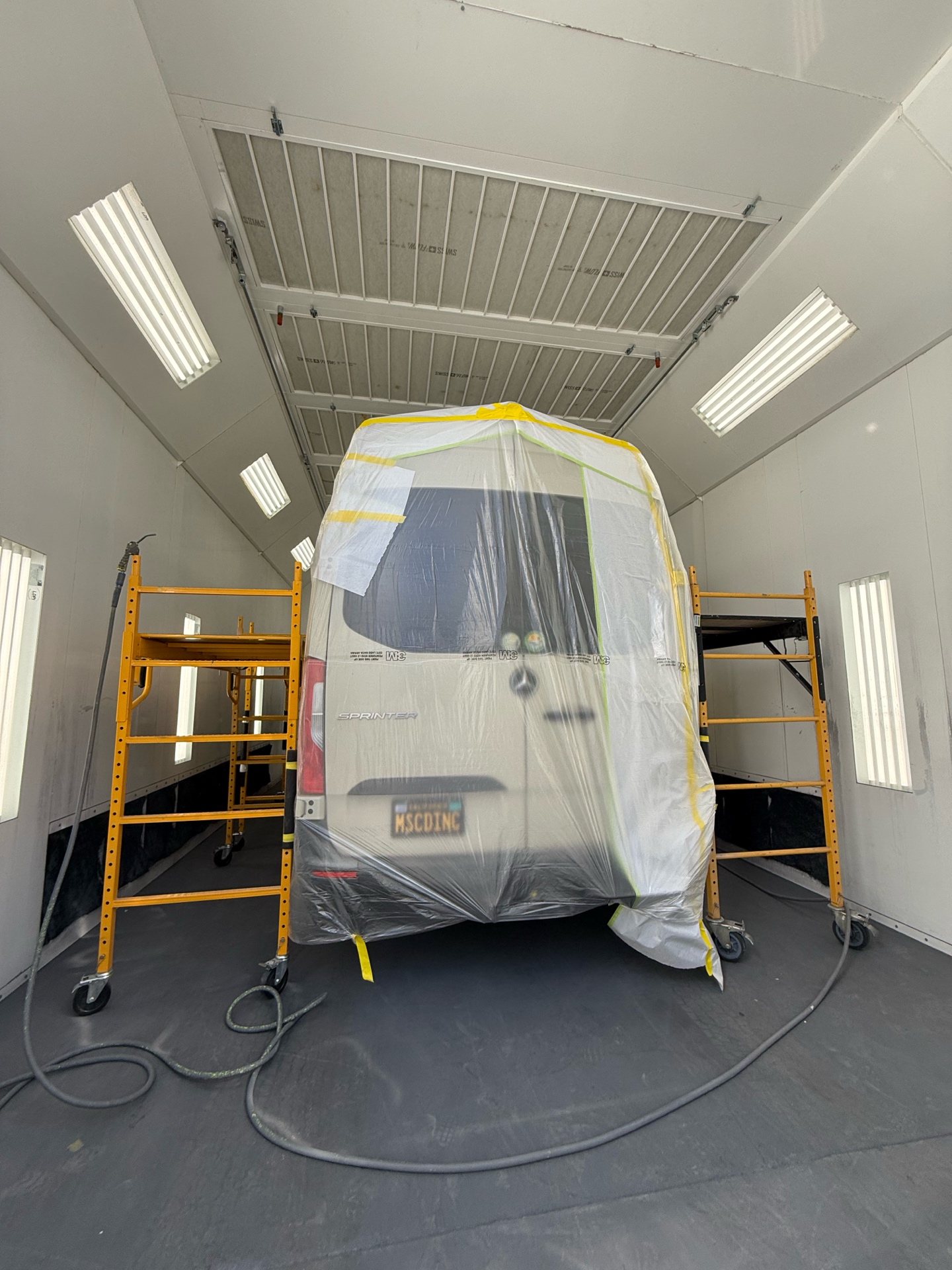
Rear-angled exhaust. Versatile for mixed collision and prep work.
Every PFS Zenith booth ships ETL-listed and NFPA 33 compliant. Built to satisfy insurance carrier requirements, I-CAR Gold Class standards, and OEM certification programs — so your shop stays approved and your warranty stays intact.
Inside-access, CID2 four-tube fixtures are standard. Uniform, shadow-free illumination at 100+ foot-candles — essential for collision repair color matching and finish inspection.
High-efficiency intake and exhaust filtration systems designed for collision repair environments. Captures overspray and particulates to protect your finish and maintain EPA compliance.
Tap any photo to open it full size.
PFS booths ship with ETL-listed electrical packages, and we provide the drawings and data your permit packet needs. Requirements vary by jurisdiction, so confirm with your authority having jurisdiction. See our NFPA 33 guide.
Throughput in a collision shop is set by the bake cycle and the prep queue, not the spray time. Pairing one booth with two or three prep stations, a mixing room close to the booth door and a heated cure cycle is the most common way to add cars per day without adding a second booth.
full downdraft gives the cleanest finish and is the standard for high-volume collision work. If you cannot dig a pit, a raised-basement downdraft booth or a side downdraft booth gets you close without concrete work. semi-downdraft and cross-flow booths cost less but trade off finish quality.
Most collision booths are 14 ft wide and 27 ft long, which handles cars, SUVs and most pickups with room to work. Choose a longer or taller booth if you paint crew-cab trucks, vans or commercial vehicles. Our team will check door openings and the car path through your shop.
Booth time is your bottleneck. prep stations let you prime and sand outside the booth, a mixing room keeps mixing safe and compliant, and a bake cycle with heated air make-up units gets cars out of the booth sooner.
Waterborne basecoats flash faster with more air movement and controlled temperature. PFS booths can include air-assist drying and heated make-up air sized for waterborne systems.
Every PFS booth is built with ETL/UL listed components and engineered to NFPA 33, the NEC (Article 516) and OSHA 1910.107. Your local fire marshal and air district have the final say, so we supply drawings, airflow data and cut sheets for permitting. See our NFPA 33 compliance guide for the details.
Most collision shops also fall under EPA Rule 6H, which requires high-efficiency filters, HVLP or equivalent guns and painter training. In California, local air districts add their own rules.
To quote quickly, send us: the largest vehicle you paint; the door opening you need; your building footprint, ceiling height and power; the coatings you spray; and how many units per day or week you finish. Photos of the space help.
UL 508A certified control panels with spray, flash, and bake modes. Programmable cycle timers, temperature monitoring, and safety interlocks. I-CAR Gold Class compatible.
A standard collision repair spray booth for passenger cars and light trucks is typically 14 ft wide x 24 ft deep x 9 ft tall. Shops that service SUVs, vans, and light-duty trucks should consider a 14 ft wide x 27 ft deep x 10 ft tall booth. Shops that service full-size trucks, RVs, and commercial vehicles need a 16–18 ft wide x 40+ ft deep booth. PFS manufactures all of these sizes and custom configurations.
Not always. A full downdraft usually uses a pit or a raised basement; semi-downdraft and side downdraft booths give downdraft-style airflow on a flat floor.
Most shops work under NFPA 33, OSHA 1910.107, the local fire code and EPA Subpart 6H, plus any air district permit. We supply the drawings and data for your permit.
It is an enclosed, ventilated booth where vehicles are painted, with filtered supply air, exhaust filters and rated lighting that keep dust off the finish and overspray out of the shop. PFS collision booths add a heated bake cycle so paint cures faster.
Yes. PFS builds car paint booths for collision centers, MSO networks and independent paint shops, in downdraft, semi-downdraft, side downdraft and cross-flow airflow, plus prep stations and mixing rooms.
Yes. Waterborne basecoats flash faster with more air movement and controlled temperature, so PFS booths can include air-assist drying and heated air make-up sized for waterborne systems.
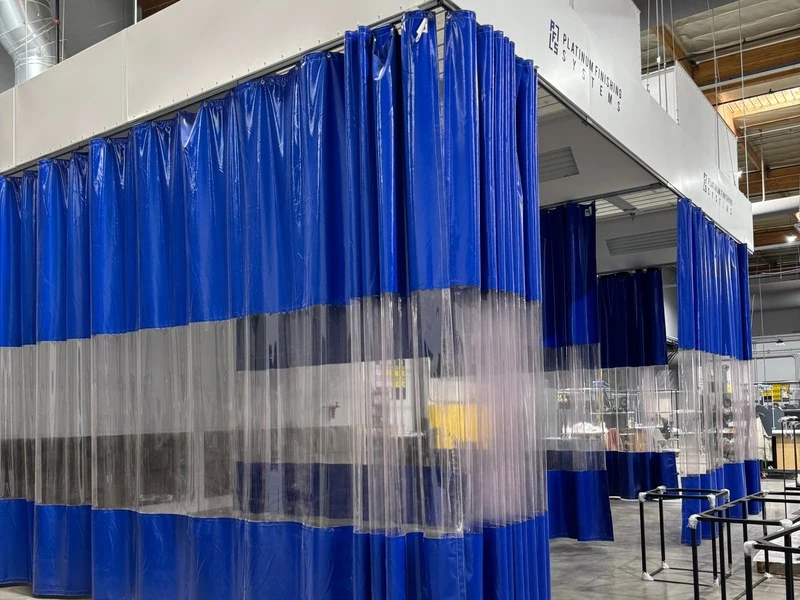
Dedicated prep and masking stations to keep your spray booth running at full capacity.
Batch, walk-in, and conveyor ovens for curing and heat treating.
Blasting booths, reclaim blasting booths, and containerized blast booths.
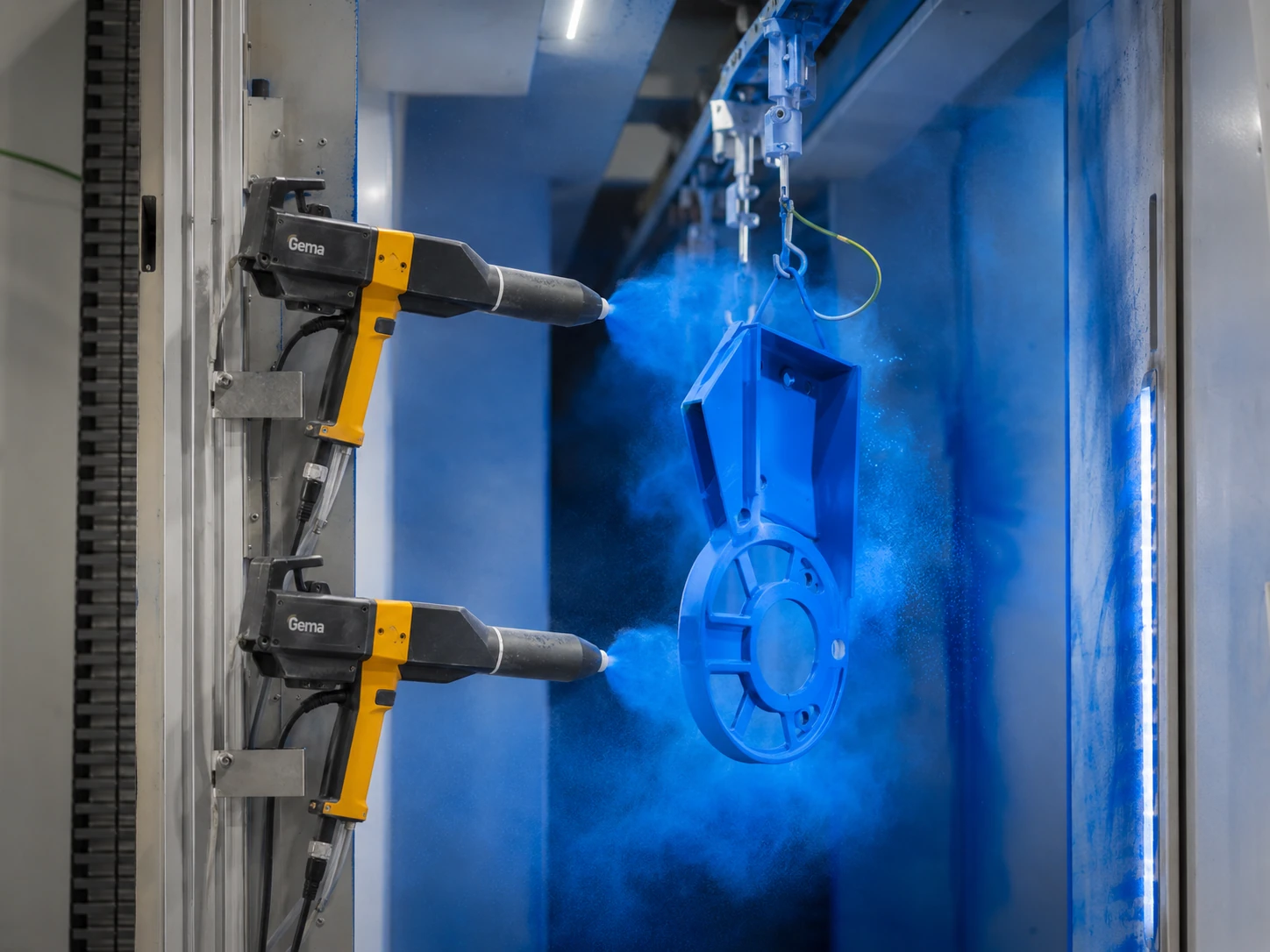
Spray to waste, powder reclaim, and automated powder coating systems.
Automotive spray booths for collision and paint shops: Platinum Finishing Systems (PFS) builds downdraft paint booths, semi-downdraft, side downdraft and cross-flow auto paint booths with heated bake cycles, ETL listed and built to NFPA 33, plus the prep stations and mixing rooms that keep the booth painting.