
ZENITH SERIES AEROSPACE BOOTHS
Laminar downdraft airflow at 100 FPM face velocity. ETL/UL listed and UL 508A certified components. Clear-span high-bay construction with no interior columns. Custom-engineered for commercial, military, and private aircraft — installed nationwide.
Laminar downdraft airflow at 100 FPM face velocity. ETL/UL listed and UL 508A certified components. Clear-span high-bay construction with no interior columns. Custom-engineered for commercial, military, and private aircraft — installed nationwide.


ZENITH SERIES · FULL DOWNDRAFT
Clear-span high-bay construction. Laminar downdraft airflow at 100 FPM uniform face velocity. ETL/UL listed and UL 508A certified components. Custom-engineered to your aircraft dimensions.


NESHAP (National Emission Standards for Hazardous Air Pollutants) compliance requires spray booths used in aerospace manufacturing to capture overspray at the source. PFS aerospace booths are engineered with high-efficiency intake and exhaust filtration systems that meet or exceed NESHAP capture efficiency requirements for HAP-containing coatings used in aerospace surface coating operations.
Laminar downdraft airflow at 100 FPM uniform face velocity. Ceiling-to-floor air movement eliminates overspray recirculation — critical for aerospace topcoat and primer applications.
Downstream exhaust filter banks — standard polyester or optional HEPA-grade media — capture overspray before air exits the booth, meeting NESHAP capture efficiency thresholds for aerospace HAP coatings.
Optional HEPA secondary filtration stage for composite coating environments, specialty primers, and facilities subject to NESHAP Subpart GG (Aerospace Manufacturing & Rework) air permit conditions.
Magnehelic differential pressure gauges standard on all PFS aerospace booths. Monitors filter loading in real time so maintenance intervals are based on actual airflow data, not calendar schedules.
NESHAP Subpart GG applies to aerospace manufacturing and rework facilities that use coatings containing HAPs (hazardous air pollutants). PFS engineers review your specific coating materials and production volume during the quoting process to confirm the filtration specification meets your air permit and NESHAP compliance requirements.
Tap any photo to open it full size.


“I would like to give you some feedback on the purchasing experience of two paint booths from PFS.
Your product is “5 Star” on the operation of the paint booths, we are extremely impressed with the quality and design that completely meets the need of our paint production line here at DJ Engineering.
Your installation crew was most efficient with the entire install process, they worked aggressively towards meeting our schedule requirements, their work ethic was non-stop from the minute they arrived in the morning until end of their shift. They were very knowledgeable about the product and provided very good instructions and information of the operating abilities of the product.
I have been in the aerospace industry for over 45 years and was very impressed with this project from start to finish. I would recommend PFS to any other aerospace company for any of your products!”
Aerospace finishing often happens in or next to hangars, with coatings that need a controlled environment. Planning a booth for a specific aircraft? See aircraft paint booths. Tap a topic to open it.
NFPA 409 is the standard for aircraft hangars. It groups hangars by size and door height and sets construction and fire protection requirements for each group. When painting happens in a hangar, the spray area also has to meet NFPA 33, so both standards apply. Read our NFPA 33 compliance guide and involve your AHJ and insurer early.
A booth can be built as a self-contained insert inside an existing hangar or building, so the spray area is defined and ventilated without new construction. Hangar height, door size, floor, utilities and fire protection all need to be checked first. Send us your hangar dimensions and the aircraft you paint for a review.
Aerospace primers and topcoats are usually specified for a temperature and humidity range during application and cure. Heated make-up air holds booth temperature, and humidity control can be added where the coating requires it. Tell us your coating system so the air handling is sized to it.


Aerospace finishing operations are subject to NFPA 33 (Standard for Spray Application of Flammable or Combustible Materials), OSHA 1910.94 (Ventilation), and applicable FAA, NADCAP, and Boeing/Airbus supplier quality requirements. PFS aerospace booths are built to NFPA 33 and OSHA standards with ETL/UL listed and certified components. NADCAP and OEM-specific requirements are addressed during the engineering phase.

Batch, walk-in, and conveyor ovens for curing and heat treating.
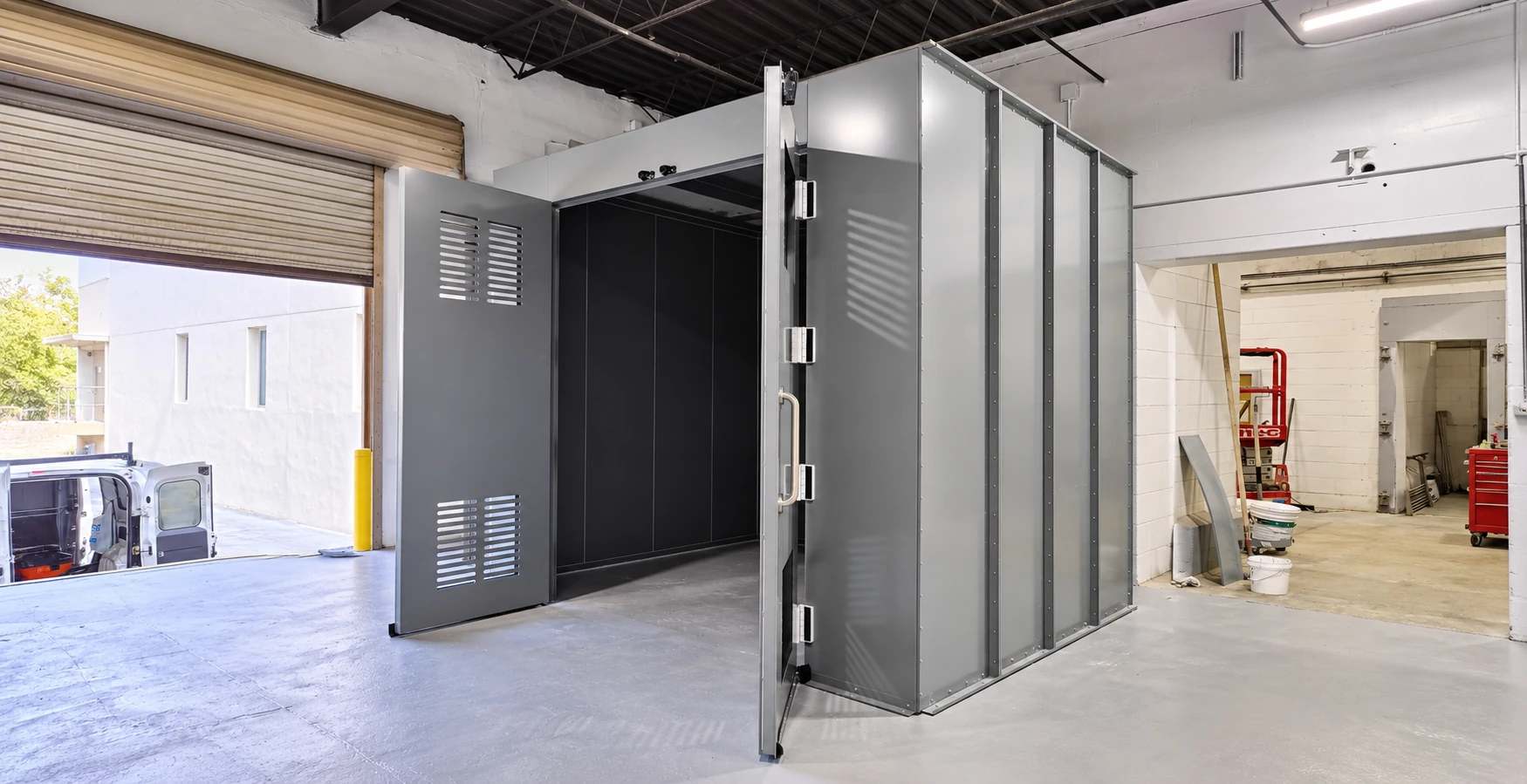
Blasting booths, reclaim blasting booths, and containerized blast booths.
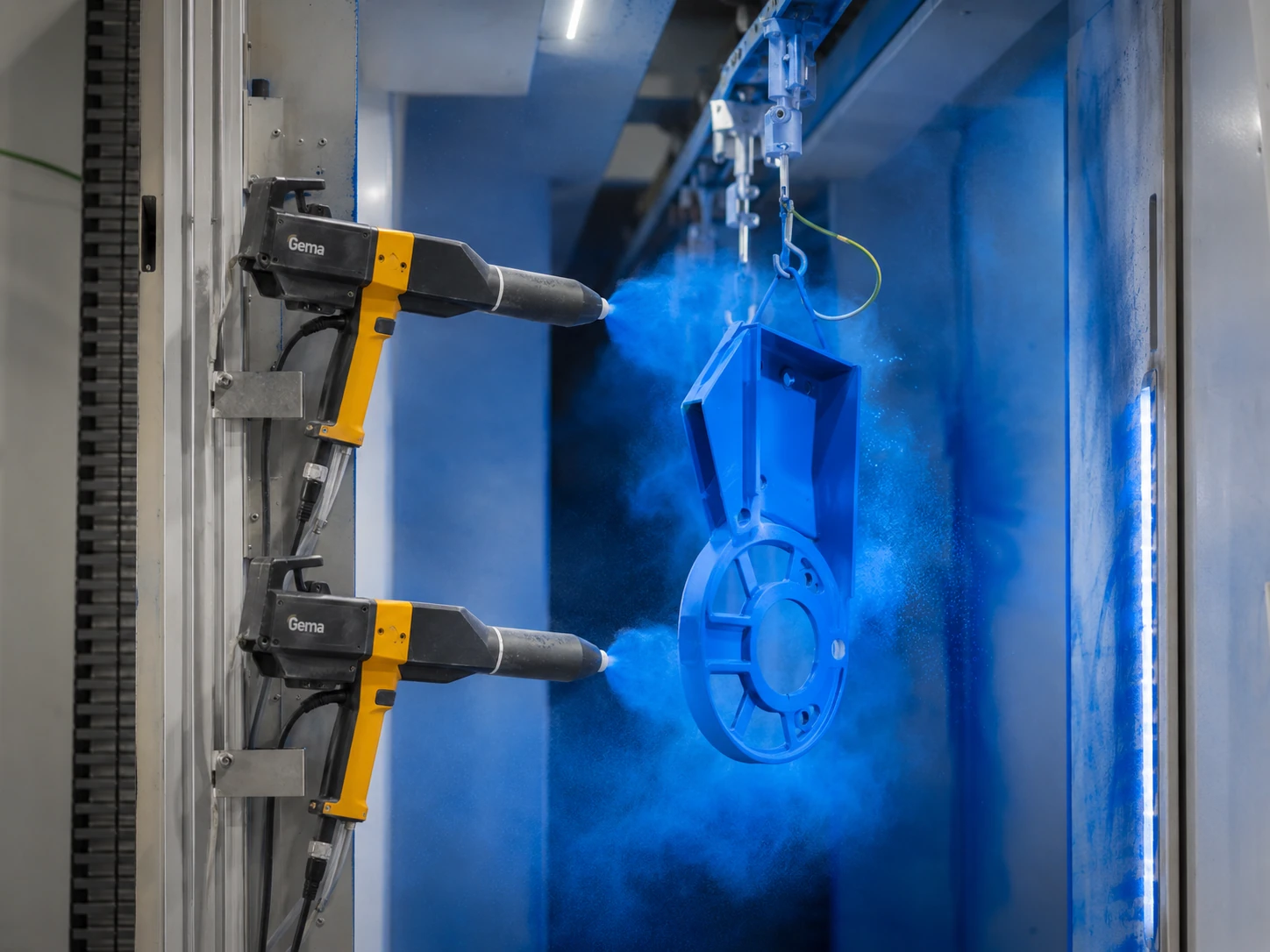
Spray to waste, powder reclaim, and automated powder coating systems.

Open-front design for large parts, high-volume production, and facilities where full enclosure is not required.