HOW IT WORKS
Raised Basement Downdraft Airflow Pattern
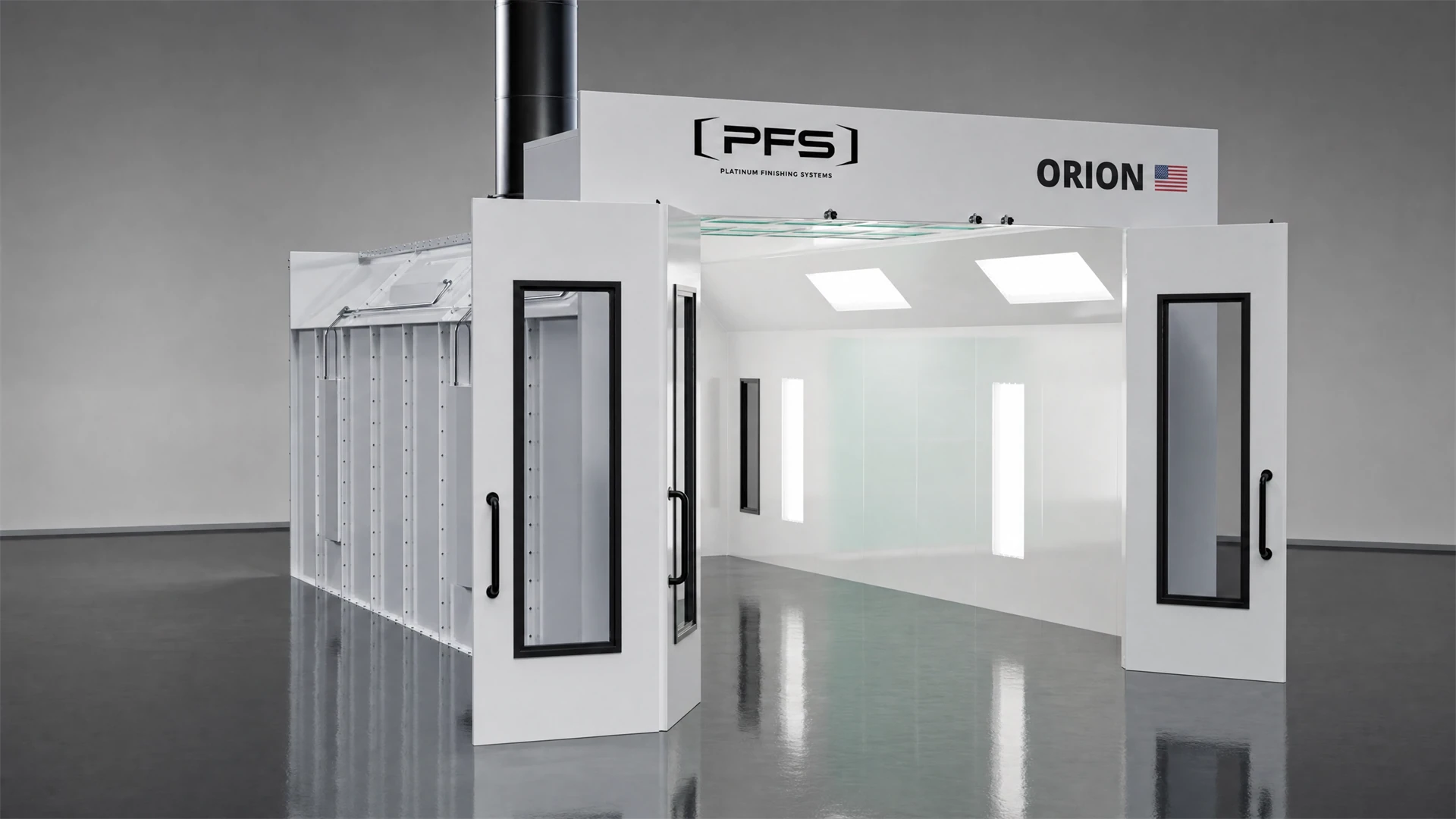
Air enters through a full ceiling plenum and flows straight down — identical to a concrete-pit full downdraft. The difference is at the floor: instead of exhausting into a pit poured into the slab, air enters a raised steel plenum sitting on top of your existing concrete, then travels through the duct to the exhaust stack.
Every Unit Ships Fully Certified
01
UL 508A Control Panel
Pairs with our PFS Core Control Panel — UL 508A certified with spray, flash, and cure modes. Programmable cycle timers, safety interlocks, and optional BMS integration.
02
Full Ceiling Plenum Intake
Air enters through a full-length ceiling plenum with intake filters spanning the entire roof. Uniform, top-to-bottom airflow eliminates dead zones and delivers the same premium finish quality as a concrete-pit full downdraft.
03
Raised Steel Floor — No Pit Required
Air exhausts through a raised grated steel floor into a below-floor steel plenum that sits directly on your existing concrete slab. No concrete cutting, no pit construction, no site preparation beyond a flat floor.
04
Below-Floor Plenum to Exhaust Stack
The raised plenum channels exhausted air through a duct to the exhaust stack. The entire system is self-contained above the slab — ideal for leased facilities, retrofit installations, and sites where concrete work is not feasible.
05
CID2 Lighting — 4-Tube Fixtures
Class I Division 2 inside-access four-tube light fixtures (fluorescent or LED tube compatible). Optional LED upgrade available. Uniform, shadow-free illumination across the full booth.
06
Fiberglass Exhaust + Tacky Intake Filters
Exhaust uses fiberglass media filters in the floor grating. Intake uses tacky-type filters standard. Blanket intake upgrades available for heated booth configurations.
07
We Ship Nationally
Factory-direct pricing, fast lead times, and dedicated project support from order through installation.
STANDARD SIZES
14' Wide — 9, 10, or 12 ft Interior Height
Custom sizes available. Contact your PFS engineer for custom sizing and raised floor specifications.
9' high
- 14′ W × 9′ H × 24′, 27′, 30′ or 33′ L
10' high
- 14′ W × 10′ H × 24′, 27′, 30′ or 33′ L
12' high
- 14′ W × 12′ H × 24′, 27′, 30′ or 33′ L
ADD-ON
Heated Options Available
Add a direct-fired or indirect-fired heat system to your raised-basement downdraft booth for accelerated cure times. Blanket intake filter upgrades included with all heated configurations.
COMPLETE YOUR SYSTEM
Pairs Well With a Mixing Room or Air Make-Up Unit
Maximize throughput and compliance by pairing your raised-basement booth with a dedicated mixing room for paint prep and an air make-up unit for tempered make-up air.