
Chemical pretreatment systems for cleaning, phosphating, and surface preparation.

Proper surface preparation is the foundation of a quality finish. PFS designs and integrates chemical pretreatment systems that clean, condition, and chemically prepare metal parts for powder coating and liquid paint applications. Our pretreatment systems remove oils, mill scale, rust, and contaminants that would otherwise cause adhesion failure, corrosion, and coating defects.
Talk to a PFS systems engineer about your integration project.PFS pretreatment systems include spray washer tunnels, immersion tank systems, and dry-off ovens configured for iron phosphate, zinc phosphate, and zirconium pretreatment chemistries. System stage count — 3-stage, 5-stage, or 7-stage — is selected based on the substrate, coating system, and corrosion resistance requirements. Our engineers work with your chemical supplier to ensure the pretreatment system is designed for the specific chemistry and process parameters you require.
Pretreatment system design must account for wastewater treatment and discharge compliance. PFS integrates wastewater treatment systems — including pH adjustment, coagulation, and filtration — as part of the pretreatment system scope. All PFS pretreatment systems are engineered to comply with applicable EPA and local discharge regulations, and we provide the documentation required for permitting.
Zirconium (or nano-ceramic) pretreatment is a newer conversion coating technology that operates at lower temperatures and produces less sludge than traditional phosphate systems. It provides corrosion resistance comparable to zinc phosphate and is compatible with multiple substrates including steel, aluminum, and galvanized steel in a single process. Zirconium pretreatment is increasingly specified for new finishing lines due to its lower operating cost and reduced environmental impact.
Stage count depends on the substrate, coating system, and corrosion resistance requirements. A 3-stage system (clean, rinse, conversion coat) is suitable for light-duty indoor applications. A 5-stage system adds a sealer rinse for improved corrosion resistance. A 7-stage system (clean, rinse, conversion coat, rinse, DI rinse, sealer, DI rinse) is specified for automotive, outdoor, and high-corrosion-resistance applications. PFS engineers recommend the appropriate stage count based on your specific requirements.
Yes. PFS integrates wastewater treatment systems — including pH adjustment tanks, coagulation and flocculation, and filtration — as part of the pretreatment system scope. We engineer the wastewater treatment system to meet applicable EPA and local discharge regulations and provide the documentation required for permitting.
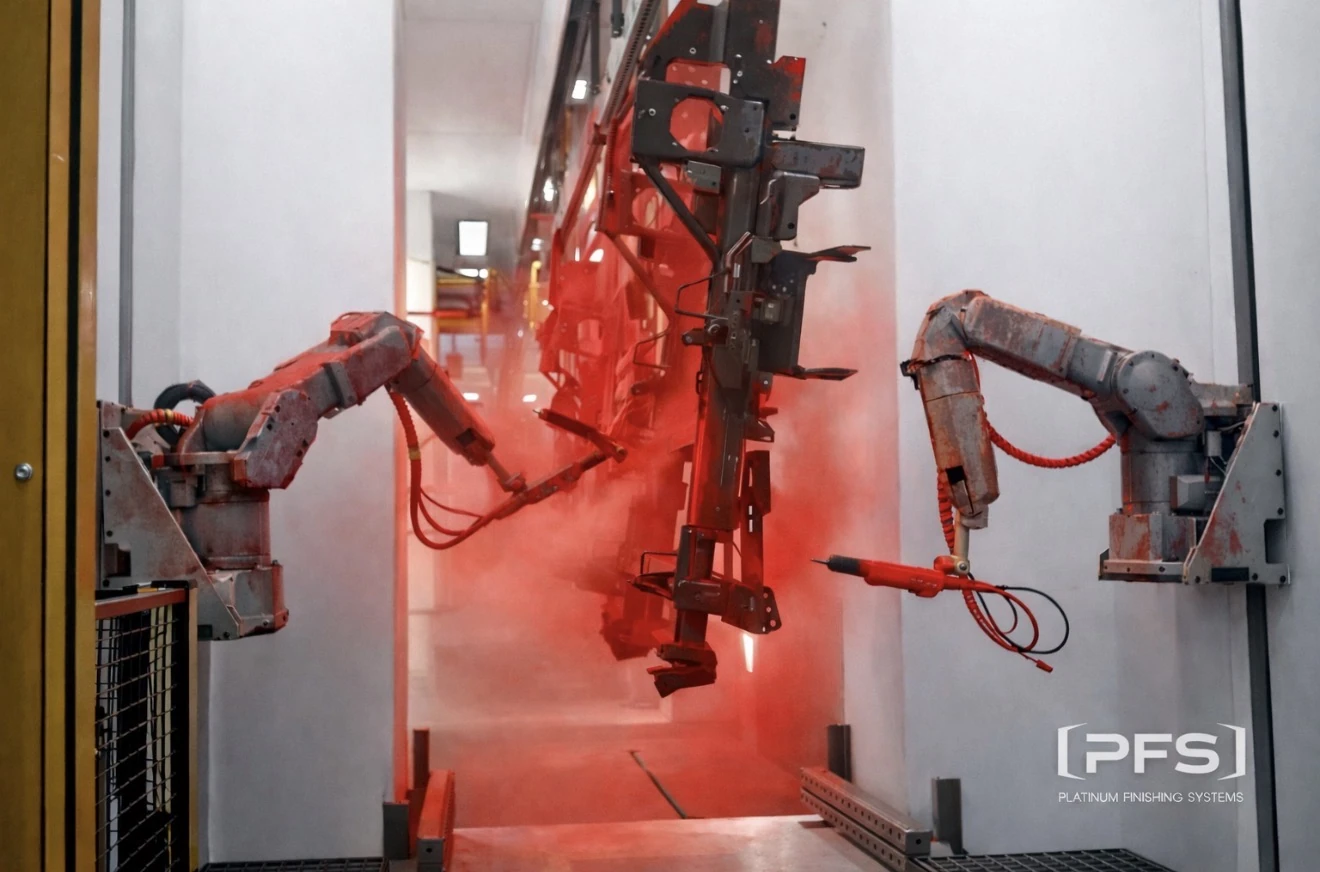
Conveyorized liquid paint lines with climate-controlled spray zones, flash-off tunnels, and curing ovens.

Complete powder coating lines: pretreatment, booth, powder recovery, cure oven, and conveyor.
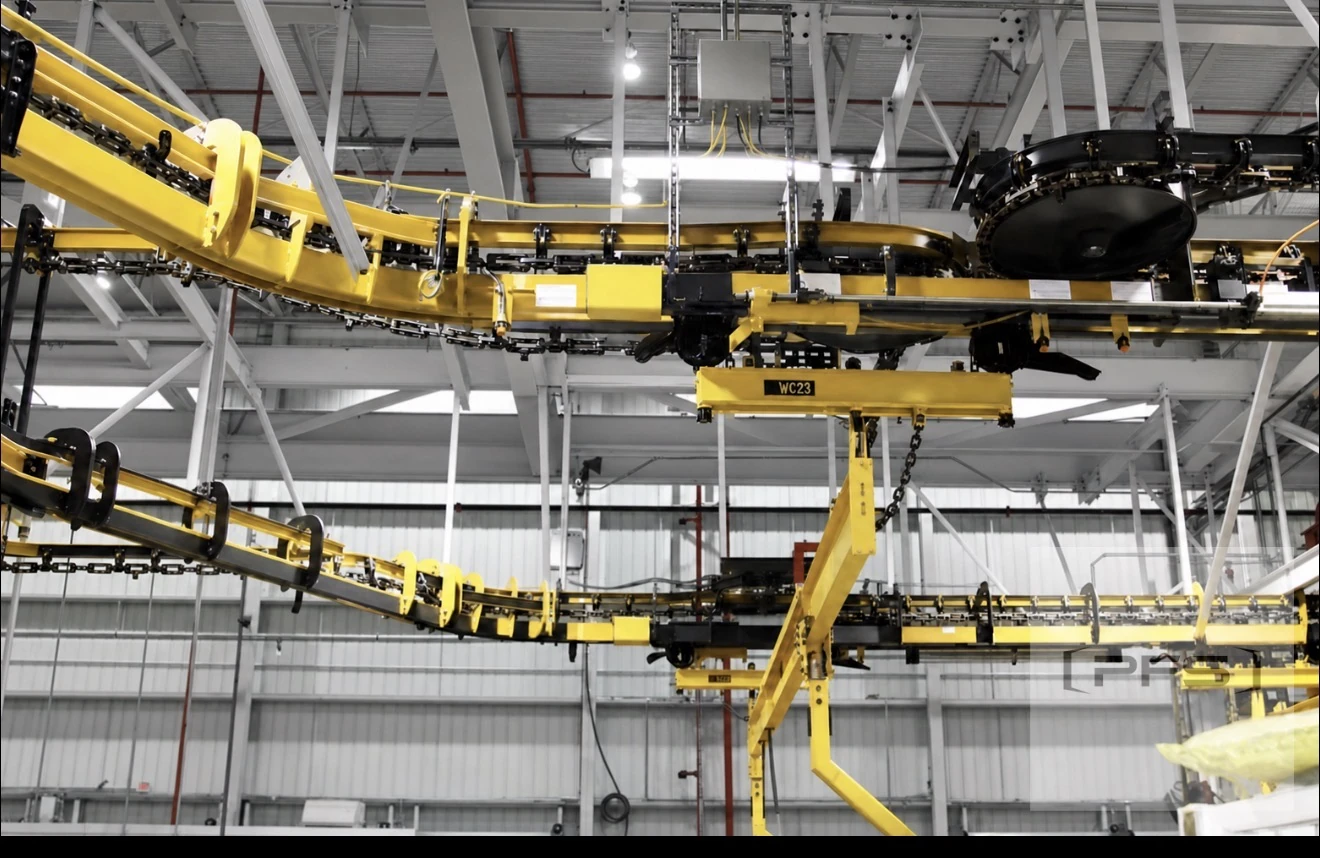
Overhead monorail, power-and-free, and floor conveyor systems for industrial finishing lines.